
Running out of storage limits your brand's growth, but an expensive relocation is rarely the most practical move. Instead, supply chain leaders must look inward to optimize their existing warehouse space. Upgrading your warehouse layout and daily workflows unlocks valuable vertical capacity you already pay for.
You do not need to overhaul your entire operation overnight to see immediate improvements. Implementing the following strategies will help you systematically reclaim wasted space:
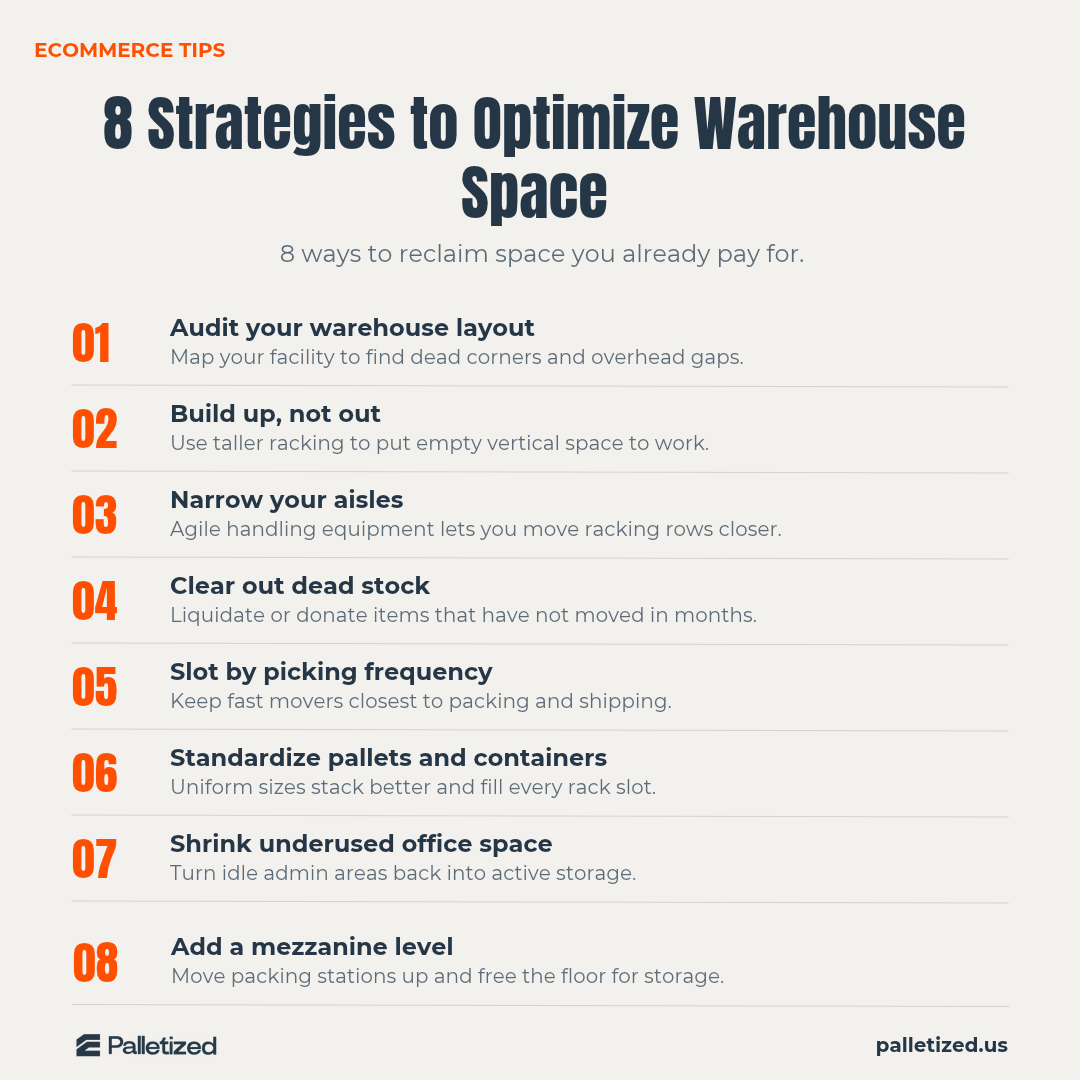
Map your entire facility to identify bottlenecks in high-traffic zones such as intake docks and dispatch areas. Spotting dead corners and open overhead gaps highlights specific areas where valuable space is being lost.
Often, the fastest way to gain capacity is by looking up rather than building out. By setting up taller storage systems, you capitalize on the empty vertical space beneath your ceiling. Just ensure your facility's fire safety codes and equipment reach capabilities support these vertical extensions.
Many older floor plans feature wide aisles designed for conventional, standard forklifts. Upgrading to agile material handling equipment allows you to push your racking rows closer together. This simple reconfiguration can reclaim up to 30 percent more usable storage space.
Storing dead stock drains your available storage capacity. Run periodic reports to identify items that have not moved. Liquidating, donating, or clearing out this outdated stock creates space for high-demand, profitable inventory.
Effective slotting involves placing your highest-velocity products as close to the packing and shipping areas as possible. Using a warehouse management system to conduct an ABC analysis categorizes inventory by picking frequency.
Keeping popular items in accessible locations drastically reduces transit time and speeds up overall fulfillment.
Relying on a chaotic mix of different pallet dimensions prevents you from stacking goods efficiently. Standardizing your pallet sizes ensures that items align perfectly inside your racking slots. This uniformity substantially improves your overall space utilization metrics.
Administrative zones often consume prime real estate that could otherwise hold inventory. Review whether your office staff can work remotely or consolidate into a workstation setup.
Converting underused office space back into active storage space delivers direct relief for congested aisles.
For warehouses with high ceilings, adding a mezzanine level offers an effective way to expand your usable square footage. You can move lightweight operations like packing stations to an elevated platform frees up important floor area. This layout adjustment prevents bottlenecks around busy fulfillment zones and preserves your principal storage racks.
Effective warehouse space utilization relies on a few interconnected operational factors. Product turnover and load profiles determine your active storage demands, while your material handling equipment sets aisle widths. Without dependable inventory management, overstocking compounds quickly, convincing managers that they need more space when smarter layout planning is the real solution.
Analyzing operational data is the most accurate way to identify how these factors impact your facility. Monitor these essential performance indicators to measure your storage efficiency:
Effective space utilization delivers more than simply eliminating congested aisles. When you optimize your warehouse operations, you establish a safer and more orderly workspace for your employees. This structural clarity decreases the time team members spend searching for products, which subsequently reduces your labor costs.
Enhancing organization reinforces operational efficiency throughout your entire supply chain. Accelerated picking times mean quicker shipments and more satisfied customers. Most importantly, optimizing your existing floor space helps you reduce costs and postpone signing an expensive new commercial lease.
While filling every available inch is tempting, you must always balance the density of automated storage solutions with floor safety and workflow speed. Overcrowded sections create bottlenecks, elevate the risk of product damage, and inevitably slow down your fulfillment workflow.
Eventually, internal reconfiguration is no longer enough to support rapid business growth. Once your in-house capacity is fully maximized, partnering with a dedicated 3PL expert is the strongest financial move. Securing flexible warehouse space through an external partner allows you to expand instantly without taking on steep new capital overhead.
Working with a 3PL provider means handing off the daily fulfillment requirements to seasoned experts. Our team ensures your stock is securely stored, accurately tracked, and dispatched efficiently while you focus on elevating your brand.
Unlocking your existing footprint requires a deliberate approach to both facility layout and daily supply chain workflows. By upgrading your storage configurations and refining your inventory management, you create a resilient foundation for long-term growth.
Taking proactive measures to optimize your operations helps your team operate safely and efficiently. When internal modifications are no longer enough to manage your order volume, it is time to seek a specialist partner.
To optimize your storage space, focus on vertical expansion and rigorous inventory control. Install taller racking to take advantage of overhead cubic volume. Additionally, clear out obsolete stock regularly and narrow your aisles to maximize your usable floor area.
Reliable data is essential to manage inventory and evaluate facility performance over time. Track these core KPIs to monitor your operational progress:
Selecting the right equipment helps you recover wasted space and organize your floor plan. Consider deploying these efficient storage solutions:


© 2026 Palletized. All rights reserved.
Developed by
